
1. Introduction
The idea of looking at organisational improvement through systems thinking and radical politics can be traced back to the end of the nineteenth and beginning of the twentieth century, with members of the Scientific Management community having a progressive or socialist orientation (Kelly, 2016; Nelson, 1979; Taylor, 1911), and Scientific Management being used as a way of making anti-capitalist regimes more effective (Merkle, 1980, chapter 4). A similar ideological commitment was found in parts of the community responsible for developing Operational Research (OR) in the 1930s and 1940s (Midgley & Ochoa-Arias, 2004), with founding OR fathers like Patrick Blackett (1897-1974) saying that “socialism will want all the science it can get… Scientists have… to make up their minds on which side they stand” (Parry & Mingers, 2004, p. 40).
Since the late 1980s, the integration of systems thinking with radical politics has been dominated by Critical Systems Thinking (CST) (Jackson, 2019; Stowell & Welch, 2012). As emphasised by Jackson (1991, p. 210), CST covers both what Burrell and Morgan (1979) refer to as radical humanism and radical structuralism, signifying that it is both concerned with issues like aiding the oppressed to evolve critical awareness and aiding them practically in their emancipatory struggles, meaning that all types of systems methods are put to use for serving political ends (Midgley, 1996).
CST was articulated at a time when certain big industries were in decline, causing OR departments to close down, with many activities of such departments later being reinvented under labels like quality management (Midgley & Ochoa-Arias, 2004, p. 5). While CST was originally articulated in the context of Community OR (COR) by arguing how COR practitioners should expand their repertoire of traditional OR methods (Jackson & Keys, 1984), some of the leading CST scholars took advantage of how Total Quality Management (TQM) was emerging as a global management fashion (Flood, 1993; Flood & Jackson, 1991). Not only was TQM seen as a solution to all sorts of management problems in the 1980s and early 1990s, it was also a managerial philosophy that put emphasis on employee satisfaction and organisational impact on society (Brown et al., 1994; Dahlgaard-Park, 2015), just like CST did.
Despite this seemingly perfect match between TQM and CST, about 80% of all TQM implementation projects appeared to be failing (Cândido & Santos, 2011; Senge, 1990), having a negative impact on its popularity. Wikipedia (2023) summarises the decline and legacy of TQM in the following manner:
Interest in TQM as an academic subject peaked around 1993. The Federal Quality Institute was shuttered in September 1995 as part of the Clinton administration’s efforts to streamline government. The European Centre for Total Quality Management closed in August 2009. TQM, as a vaguely defined quality management approach, was largely supplanted by the ISO 9000 collection of standards and their formal certification processes in the 1990s. Business interest in quality improvement under the TQM name also faded as Jack Welch’s success attracted attention to Six Sigma and Toyota’s success attracted attention to lean manufacturing, though the three share many of the same tools, techniques, and significant portions of the same philosophy. TQM lives on in various national quality awards around the globe.
When a management technique has a latency period, a rapid popularity surge, a period of popularity and a period of decline, as described in the quote above, Abrahamson and Fairchild (1999) refer to it as a management fashion, and they use TQM as an illustration. However, describing something as a fad or a fashion does not necessarily mean that it is without value. For some CST scholars, it was useful to make a short-term commitment to TQM (Flood, 1993), advancing CST by piggybacking on the current fashion of TQM before jumping on to Learning Organisations as the next one (Flood, 1999), although for CST to continue to have a serious impact in organisations and society, it might seem more practical to align with something more stable than fads and fashions.
On the other hand, the fact that TQM became a fashion did not mean that it became peripheral after having passed its peak of popularity (Cole, 1999; van der Wiele et al., 2000). As explained in the quote above, TQM lives on through the national quality awards, suggesting that it remains relevant as long as the quality awards remain relevant, both from an academic and practical perspective, even when noticing that the quality awards are not as popular as they used to be (Cook & Zhang, 2019).
As CST-driven research combines scholarship with political activism, what made TQM initially interesting was that it opened doors for doing political action research in client organisations and getting published in relevant scientific outlets, so it would be nice if TQM would continue to be a pulsating door opener. But is it? Just like Madsen (2020), we are asking the question of whether TQM is dead or alive, and we are asking it from the perspective of wanting to find out to which extent a TQM-framing of CST-related research is useful for getting access to client organisations and getting resulting research published in relevant outlets.
The purpose of the paper is to investigate the aliveness of TQM by use of literature review, survey, bibliometric analysis and action research, wondering whether TQM still has the same strong potential for framing CST-oriented TQM action research as it did when people like Flood and Jackson (1991) embraced it.
The paper is organised in six sections. The first section has focused on background and motivational issues. The next section will review literature on management fashions, TQM and CST, producing a research hypothesis of TQM as a lucrative investment for CST researchers, or what is called a Cash Cow in the language of the Boston Consultancy Group’s growth-share matrix (BCG matrix). This is followed by a methodology section, explaining how the hypothesis is to be investigated through survey, bibliometric analysis and action research, leading towards two sections for presenting and then discussing the results. The concluding section contains a call for what we describe as Critical TQM (CTQM) and Scientific Self-Management (SCSM), which are terms we introduce for encouraging continued exploration of CST through engagement with TQM and Scientific Management.
2. Literature review
The section starts by reviewing some of the literature on management fashions relevant to CST-driven TQM. This is followed by an explanation of what TQM is and why it matters, which is followed by explanations of the relationship between TQM and CST. The section concludes with a formulation of a research hypothesis on TQM being a useful investment for CST researchers.
2.1. Management fashion
Abrahamson (1996) defines management fashion as characterised by rapid, bell-shaped swings in the popularity of management techniques. Unlike fashions in dresses, interior design or cooking, he does not see management fashions as trivial but rather identifies the fashion dynamics as important for the evolution of the theory and practice of management. Management fashion is typically created by managers, he states, not by business schools or academics, and they are often designed for solving what is perceived as a serious problem by the management community at large.
Total Quality Management (TQM) is one of Abrahamson’s prime examples. TQM is understood as a management philosophy developed by American quality management experts, which had an important impact on Japanese industry in the post-war years, causing Japan to be perceived as a serious threat to US industry in the early 1980s and thus causing TQM to become popular for a certain period of time.
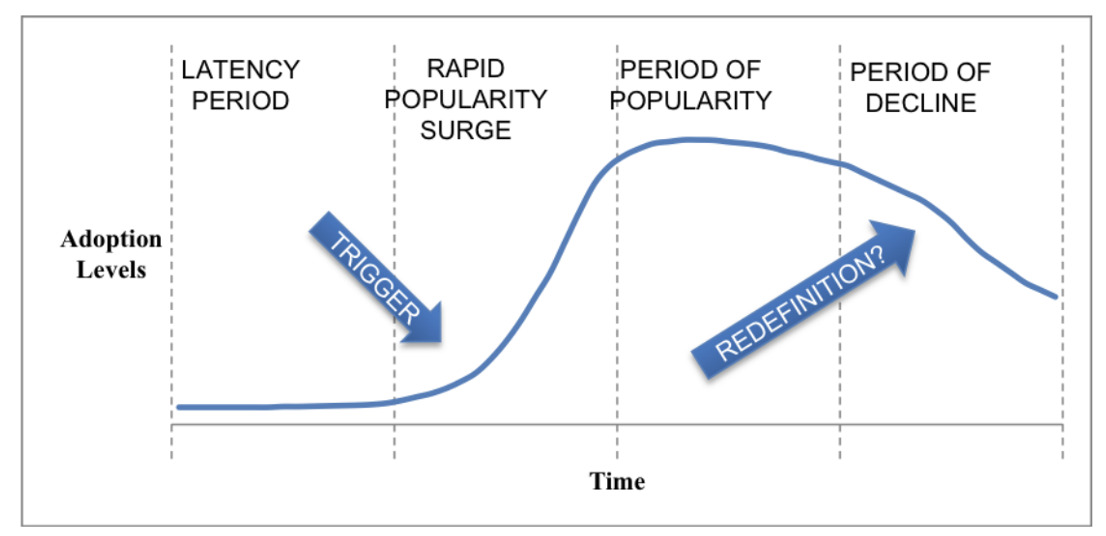
Nevertheless, in order to better understand the cycles of management fashions, Abrahamson and Fairchild (1999) focused on Quality Circles (QCs), which was a more short-lived fashion just before TQM took off, making it easier to analyse because it was a fashion that had come and gone while TQM had not ended its cycle yet. Contrary to how they initially thought that fashions were symmetrically bell-shaped in the sense of something that became rapidly popular and vanished with equal speed, they noticed from QCs an asymmetric pattern of four stages; first a latency period, then a rapid popularity surge, then a period of popularity and finally a period of decline, as illustrated in Figure 1.
The visual pattern is based on publication statistics in the popular press, semi-academic and academic press for QCs and other management techniques (Abrahamson & Fairchild, 1999, pp. 722–723), showing how the period of popularity and decline are much longer than what is typical for fashions in general. The reason for this asymmetry had to do with academic interest. While the coverage of QCs, TQM and Business Process Reengineering (BPR) followed the typical fashion curve in the popular press, with the introduction of the technique, rapid rise, peak, rapid decline and rejection, the academic press caught on to the fashionable ideas when they were on the rise or had already peaked in the popular press, and then spend more time exploring the idea, causing a much longer period of popularity and a much longer period of decline as well.
The figure also illustrates how the rapid popularity surge is typically triggered by specific events, like the threat of Japanese competition and the way QCs were seen as a solution to this threat. It also points to how a fashion in decline may be redefined to create a new fashion, like the QCs phenomenon could be seen as a forerunner to TQM, and, as mentioned in the introduction, how ISO 9001, Six Sigma and Lean Manufacturing were replacing TQM while they were essentially recycling TQM ideas with different emphasises.
.png)
This point about recycling is particularly evident if we look at the way ISO 9001, Six Sigma and Lean Manufacturing literature keeps on referring to W. Edwards Deming and other management gurus that were part of the TQM fashion. For Abrahamson (1996), management fashions are provided through the interaction between business schools, consultancy firms, management gurus and the publishing industry, where the perceived authority of the management gurus may perhaps be even more important than the other factors (Abrahamson, 1996, p. 266; Huczynski, 1993).
2.2. What TQM is and why it matters
As pointed out by Madsen (2020), there are different ways of explaining the history of TQM, so he adopted a narrative similar to the account given by the American Society for Quality (ASQ, 2023b), using the development of statistical quality control in the 1930s as the starting point. Actually, ASQ started its history with the 1920s, saying that the first seeds of quality management were planted as Scientific Management swept through the US industry. This way of acknowledging Scientific Management makes it possible to say that TQM was influenced by Scientific Management while also representing a break, which became an important selling point in the 1980s, when it was argued that TQM was a revolution in management. It was seen as different from Scientific Management, for instance, in the way it emphasised employee empowerment and collaboration, and, as pointed out by Abrahamson and Fairchild (1999), job enrichment and quality circles were two management fashions that preceded TQM, making the TQM fashion repeat recently fashionable ideas in a manner that made it both recognisable and innovative.
However, if we look at the history of TQM as told by the Japanese quality gurus of the same period (Ishikawa, 1985; Shingo, 1987), the story is different. From their perspective, TQM was more like Scientific Management adapted to Japanese culture, meaning that both job enrichment and statistical methods played a much lesser part. The defining characteristic of TQM, as some of them saw it, was the scientific nature of Scientific Management, meaning that it turned the factory into a laboratory for doing experiments on how to improve quality, productivity and competitive position. Shingo (1987, pp. xv–xvi) writes:
Scientific management was introduced in Japan in 1907 with the publication of a complete translation by Hoshino Yukinori of Frederick W. Taylor’s classic work, The Principles of Scientific Management[1]. […] In 1931, I ran across a translation of Taylor’s book in a neighbourhood bookstore. Thumbing through it, I found a most unusual statement. “Inexpensive goods,” it said, “can be produced even when workers are paid high wages.” The apparent impossibility of such a proposition aroused my suspicions, and as I continued to leaf through the book, I saw that Taylor claimed the feat was possible if efficiency was raised to a high level. For me, this argument was utterly novel, so I bought the book and did not sleep until I had read it from cover to cover. At that point, I resolved to devote my life to scientific management.
Shingo (ibid, p. 7) also warns against putting too much emphasis on statistical quality control (SQC) and statistical process control (SPC). Although such theories, tools and methods are important, they only matter when they are used competently in situations where they are of practical use.
We are also discovering that most defects occur not because of improperly set standards, but as the result of errors in control and execution. Surely, the fact that source inspection and the poka-yoke system permit continuous zero-defect production in so many plants bears eloquent testimony to this assertion.
Although there is no doubt that the teachings of Deming, Juran, Feigenbaum and others had a deep impact on the development of the Japanese version of TQM, the ASQ account of the story presents a narrative that serves the interests of ASQ, making people like Shewhart and Deming into intellectual heroes of the movement, rather than saying, as Shingo does, that TQM was essentially nothing but Scientific Management. In his view, Deming and Juran did not create the Japanese miracle. They played an important part through their teachings and seminars, but the seed that gradually evolved into TQM was the translation of Taylor’s book on Scientific Management.
Ishikawa (1985, pp. 14–23), on the other hand, gives a history of total quality control that is closer to the ASQ account, stressing how the work of Shewhart, Deming and Juran influenced Japanese industry through the Union of Japanese Scientists and Engineers (JUSE), which was established in 1946, the same year as ASQ. The role of Deming in explaining the science of plan-do-check-act (PDCA) and SPC is emphasised, as is the role of Juran in getting management interested in quality control, thus laying the foundation for turning total quality control into total quality management.
Dr. Juran’s visit marked a transition in Japan’s quality control activities from dealing primarily with technology based in factories to an overall concern for the entire management. There is a limit to statistical quality control which has engineers as its prime movers. The Juran visit created an atmosphere in which QC was to be regarded as a tool of management, thus creating an opening for the establishment of total quality control as we know it today.
Ishikawa also downplays the role of Scientific Management by saying that “Japan also lagged behind, using the so-called Taylor method in certain quarters” (ibid, p. 15), but such statements may have been used politically to create an identity for JUSE in post-war Japan, as there are also indications of how TQM essentially consisted of making Scientific Management more scientific (ibid, p. 59):
Dr. Taylor used to describe control with these words, “plan-do-see.” What does the word “see” mean? To Japanese middle school students, it simply means to look at, and that does not convey Taylor’s meaning. So we have rephrased it as follows: “plan-do-check-action” (PDCA).
It is unclear what is the exact meaning of the quote, as the plan-do-test cycle originated with Walter Shewhart several decades after the death of Frederick Taylor (Deming, 1986, p. 88), and Shewhart’s point was to identify similarities between SPC-based quality control in mass production and scientific experiments, showing that both followed a plan-do-test structure (Shewhart, 1939), but the “plan-do-see” statement could be interpreted as a more general reference to Taylor’s use of scientific experiments for improving organisational performance. Without the existence of modern statistical methods for evaluating industrial experiments, the evaluation would have to rely more on “see” than “check”.
It is possible to follow the example of Madsen (2020) and others in making the history of TQM start with the development of statistical quality control, but an alternative and perhaps more useful perspective for systems thinkers is to see the history of TQM through the perspective of making Scientific Management more scientific (Kreis, 2002, p. 137; Ogland, 2006, 2009). For special interest groups, such as ASQ and JUSE, there was no distinction between total quality control (TQC) and total quality management (TQM), as the terms meant the same thing, namely company-wide quality control, but it is important to remember that quality control was only the final step in the “plan-do-see” cycle of Scientific Management. Unlike TQC, the purpose of Scientific Management was to improve productivity, quality and competitive position by way of improving tools, methods and processes, which would result from PDCA and SPC (Deming, 1982, 1986).
To emphasise how TQM was not only quality control, Deming (1994) developed a theoretical framework for understanding organisations and management. He referred to the framework as a “system of profound knowledge”, made up of four interconnected components (ibid, p. 93):
-
Appreciation for a system
-
Knowledge about variation
-
Theory of knowledge
-
Psychology
By a system he means “a network of interdependent components that work together to try to accomplish the aim of the system” (ibid, p. 95), using a symphony orchestra as an illustration, thus stressing the need for cooperation and how the local supply and demand of components depend on other components, as is typical of TQM-inspired frameworks like Lean Manufacturing (aka just-in-time management) (Womack & Jones, 1996).
“Knowledge about variation” refers to competence in statistical thinking more than skills in using statistical methods, meaning that Deming’s (1994, pp. 98–101) main concern is the way management by numbers can lead to wrong decisions and disaster when managers do not understand the likes of statistical variation, statistical stability, statistical significance and measurement theory. He also worries about how incompetence in statistical thinking may result in the use of certain statistical methods in contexts where they do not make sense and may result in wrong decisions (ibid, pp. 100-101).
When Deming (1994, pp. 101–107) talks about “theory of knowledge” (epistemology), he is particularly concerned with the need for making testable predictions within the PDCA framework. When deciding to improve something, the plan (P of PDCA) should contain a theoretical model that makes it possible to make testable predictions. If the outcome of the experiment (C of PDCA) deviates significantly from what was predicted, this merits investigation of the model, perhaps resulting in the model being revised as a consequence of what was learned. Without theory, there is nothing to revise and nothing to learn, Deming says (ibid, p. 102).
Psychology helps us to understand people, the interaction between people and circumstances, the interaction between customer and supplier, the interaction between teacher and student, the interaction between a manager and his people and any system of management, Deming (1994, pp. 107–108) states, although this focus on relationship also shows that he is using psychology in a wide sense that could also include sociology and politics. As he shows repeatedly through his work, it is not only the individual that needs to be understood but also how issues like power-relationship and culture can have positive and negative impacts on organisational performance.
In a way, one might say that Deming’s approach to TQM is the opposite of what made TQM into a management fashion. The four components of his system of profound knowledge all stress deep aspects of how to transform industry by use of Scientific Management, although he never mentions neither Taylor or Scientific Management in his texts. In general, he is dismissive of labels, including TQM, ISO 9001, Lean Manufacturing and Six Sigma. For him, the different frameworks only scratched the surface of what needed to be done, and the labels also worked against the interest of true TQM as they did not create the change of mentality that he believed was needed (Deming, 1986, p. x):
Solving problems, big problems and little problems, will not halt the decline of American industry, nor will expansion in use of computers, gadgets, and robotic machinery. Benefits from massive expansion of new machinery also constitute a vain hope. Massive immediate expansion in the teaching of statistical methods to production workers is not the answer either, nor wholesale flashes of quality control circles (QC-Circles). All these activities make their contribution, but they only prolong the life of the patient; they cannot halt the decline. Only transformation of the American style of management, and of governmental relations with industry, can halt the decline and give American industry a chance to lead the world again.
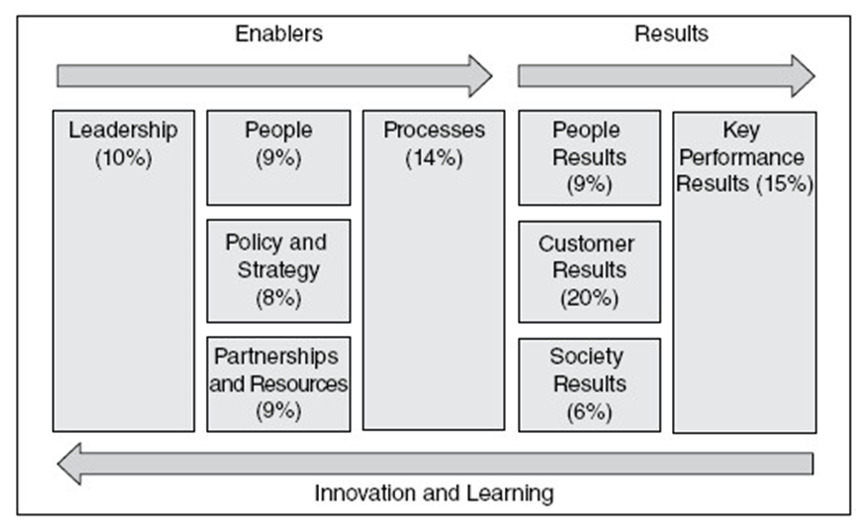
The Deming Prize is the longest-running and one of the highest awards on TQM in the world (Hellsten & Klefsjö, 2000). It was established by JUSE in 1951 to honour Deming’s contribution to Japan’s proliferation of statistical quality control after World War II. Other national quality awards followed, such as the Malcolm Baldridge National Quality Award for US industry in 1988 and the European Quality Award in 1992. The criteria for the national awards are based on regional or national TQM models, such as the excellence model provided by the European Foundation for Quality Management (EFQM model) in Figure 2.
Like other regional models, the EFQM model serves an important purpose in providing an operational definition of what TQM means in a regional context, which in this case is the European context. As seen from the diagram, the model originally distinguished between enablers and results, where organisational results were evaluated against four criteria; customer satisfaction, employee satisfaction, impacts on society and business results. The percentage values associated with the different criteria illustrate the different weights they are given when the TQM maturity of organisation is assessed on a scale from 0 to 1000.
.png)
The EFQM model has been described as a holistic management model (Dahlgaard-Park, 2015, p. 174), meaning that it is not only necessary to be oriented towards stakeholders (including customers, employees, shareholders and owners) but it is also important to act according to corporate social responsibility standards regarding its impact on society. TQM is also process oriented, it includes everyone inside of the organisation, it is understood as a company-wide task, it understands quality as a process committed to continual improvement, and it aims to satisfy customer needs. Its final goal is organisational excellence.
To make sure that the European Quality Award stimulates organisations in keeping up to date with the latest developments in TQM theory, the EFQM model has been revised about every sixth year (Rosak-Szyrocka & Roszak, 2019), with the current EFQM-2020 version having a strengthened focus on issues like organisational purpose, agility and sustainability (Fonseca, 2021).
Given the long history of TQM, it may be surprising that most TQM implementation efforts still result in failure. Interestingly, reasons for TQM implementation failure are often explained with reference to issues that are already defined as critical issues in the EFQM model (Mosadeghrad, 2014), which means that the key challenge is not lack of theory. As has long been argued, the main challenge seems to be the difficulty in integrating TQM ideals into the life of the organisation (Brown et al., 1994), which may be particularly difficult in cultures characterised by fear, oppression and violence (Seddon, 1997; Steingard & Fitzgibbons, 1993).
2.3. TQM and Critical Systems Thinking
Identifying organisational politics as a key challenge in TQM implementation, Flood and Jackson (1991) put forward an argument on why and how Critical Systems Thinking (CST) should be used as a philosophical framework for TQM implementation and organisational development in general, illustrated in practice through the use of their own CST-methodology known as Total Systems Intervention (TSI). Although the idea of using TSI to implement TQM makes theoretical sense (Beckford, 2002; Flood, 1993; Flood & Jackson, 1991), in practice it may result in conflict, crisis and burnout (Ogland, 2022b, 2023b, 2023c).
Burnout due to conflict is a challenge to CST-based TQM implementation, but it is not obvious that conflict should result in burnout. If CST-based TQM implementation results in victory for the group the CST-driven TQM implementors align with, it should result in both psychological and sociological strengthening of positions, which means that CST-based TQM implementation could be a useful area for doing CST-oriented action research. Furthermore, if one looks at the latest developments in CST, including discussions on how new foundations may be reached by integrating the ideas of Alexander Bogdanov and Stafford Beer (Jackson, 2023), which could signal a change in CST orientation from “radical humanism” towards “radical structuralism” (Ogland, 2023a), this could have a positive impact on CST-driven TQM implementation.
.png)
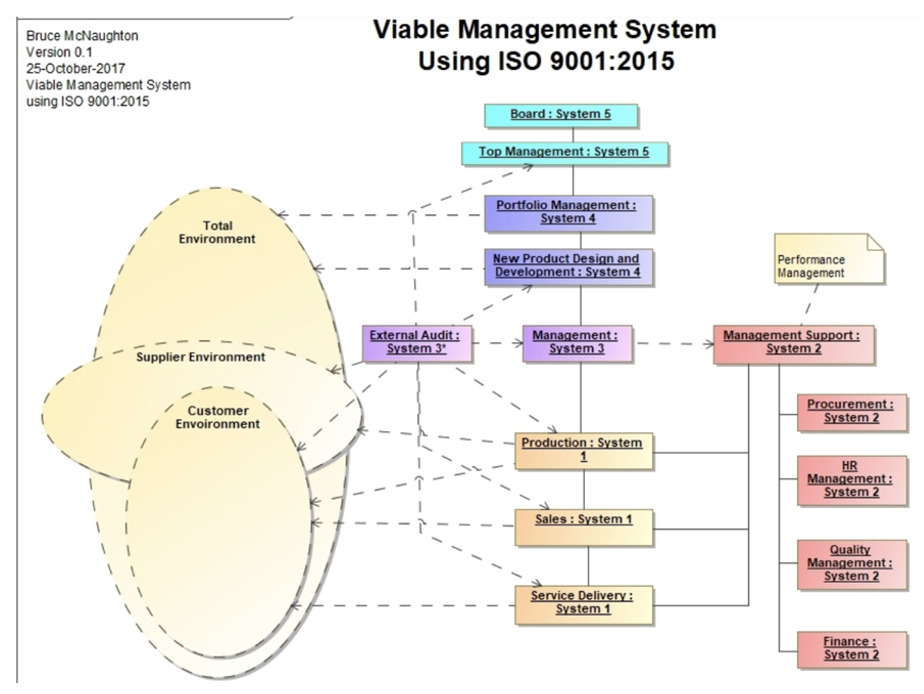
The ideas of Stafford Beer, such as the Viable System Model (VSM), have already played important parts in CST-driven TQM implementation (Flood, 1993), and there have also been some theoretical and empirical studies on how to use the VSM for developing quality management systems (Delgado-Fernández et al., 2013; Ogland, 2023a; Pino et al., 2021), but these studies do little more than to suggest that there is much to gain from combining the ISO 9001 framework with VSM, as is also illustrated in Figure 3, while there is hardly anything said on issues like how a bottom-up recursive implementation of VSM could be used for designing quality management systems in non-hierarchical organisations.
As explained by Flood (1993, chapter 8), VSM can be used for “designing freedom”, which is particularly relevant for tasks like designing quality management systems, although the design may be preceded by “freedom through debate” by use of approaches like Soft Systems Methodology (SSM) for understanding the situation, and superseded by “freedom by disemprisoning” by approaches like Critical System Heuristics (CSH) for evaluating and acting on the outcome.
To some extent, the idea of CST-driven TQM lives on (e.g. Beckford, 2022), making sure that CST methods like TSI are not forgotten within the context of the latest developments in quality management, but there is also a need for rethinking the theoretical foundation of Flood’s (1990; 1993) approach by means of considering the latest advances in both CST and TQM, perhaps with a special focus on how both CST and TQM can be used in bottom-up initiatives (Jackson, 2003; Ogland, 2018, 2023c; Sadd & Evans, 2022).
2.4. Research hypothesis
From a CST perspective, the reason for asking the research question of whether TQM is dead or alive has to do with how TQM once was a useful vehicle for CST research and wondering if it could still be used this way. If TQM is dead, in the sense of no longer having any practical relevance for industry and academic debate, it seems unlikely that investing time and effort in CST-driven TQM action research would pay off. On the other hand, if TQM is alive, meaning that TQM-related ideas, tools and methods are still being used in industry in a manner that stimulates academic debate, CST-driven action research on how to implement TQM could pay off well in both practical and academic terms.
.png)
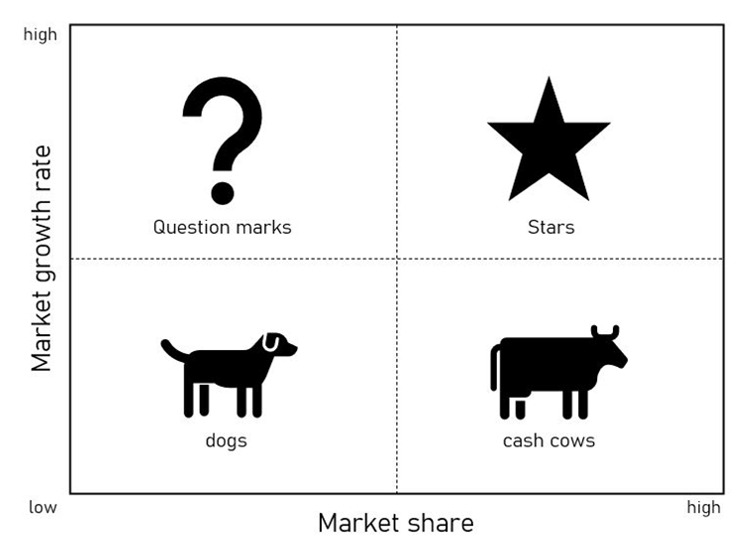
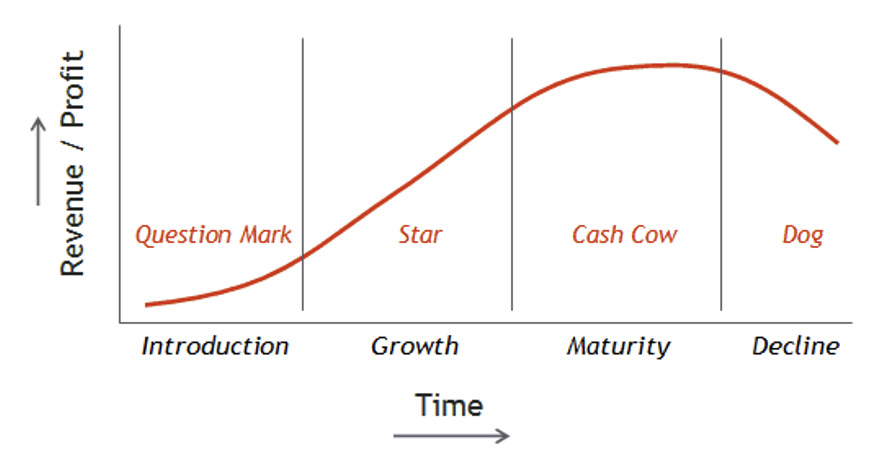
Drawing inspiration from Koch (2008), the Boston Consultancy Group (BCG) matrix in Figure 4 might be helpful for thinking about whether something like TQM could be a useful investment for CST researchers. The BCG matrix divides the investment portfolio into four groups, depending on market share and market growth rate. The investments are expected to pay off differently. The Cash Cow represents a safe investment in the sense that it has a high market share and may thus produce high payoffs. However, as it lacks the high market growth rate of the Star, the market share may gradually decline, turning it into a Dog. Question Marks, on the other hand, are options that have high market growth rates without high market share, meaning that they may either develop into Stars or Dogs and thus be either very good or very bad investments.
When applying the BCG matrix for CST scholars to decide on whether to invest in TQM, the market for doing research could be measured in academic interest by means of what gets published in scientific outlets. The question of whether TQM is dead or alive thus translates into the question of whether TQM, which was a Star in the late 1980s and early 1990s, is presently a healthy Cash Cow or a dying Dog. It is also theoretically possible that today’s TQM could be seen as a Question Mark if one believes that we are on the brink of experiencing a TQM renaissance that will take the world by storm, although there was nothing in the literature review that pointed in this direction.
Based on how TQM serves as the philosophical basis for the national quality awards, and how the EFQM model used for the European Quality Award was radically updated in 2020, one might expect that there is enough food for future research to sustain academic interest in TQM. In other words, the research hypothesis is that TQM remains alive, which would mean that TQM should still be considered a Cash Cow for CST scholars to be exploited for doing politically oriented action research in organisations.
3. Methodology
The methodology used for exploring the hypothesis that TQM is a Cash Cow for CST-oriented researchers is a mixed methods approach (Creswell, 2003), consisting of three steps. It starts with a survey among MSc sport management students to get hints at how a new generation of managers looks at TQM, adding context to the research hypothesis. This is followed by a bibliometric study aimed at identifying broad trends that verify or contradict the hypothesis. The study ends with a case study where one of the authors shares some personal reflections from having done several decades of CST-driven TQM action research.
3.1. Survey
Before giving a TQM lecture to a group of some 30 Sport Management MSc students, a blog was created for having them respond to the following set of questions, which would then function as preparation for having a class discussion immediately after the lecture and at a seminar discussion somewhat later.
-
What was your awareness of Total Quality Management (TQM) before starting the MSc?
-
What is your understanding of TQM?
-
How would you use TQM within the area of sport management?
-
What do you see as the threats to TQM?
-
Where do you think TQM might go wrong?
-
In what way do you see TQM as dead or alive?
The blog was designed in a manner to allow each of the students to see what the others were writing, in the belief that openness would stimulate internal debate and produce a wide variety of responses. As this approach was also expected to result in people ignoring to respond if they had nothing to add, control parameters were included for counting the number of replies and views for each question, assuming that views without additional replies would be likely to be supportive of what had already been said.
3.2. Bibliometric study
As argued by Cronin and Sugimoto (2014), the internet has changed the environment of scholarly publishing in terms of how citations, h-indexes and other bibliometrics can be tracked, controlled and used by individual scholars and communities, so the validity may sometimes be in question and should be used with caution. Unlike Ho et al (2023), who have looked at bibliometric trends by considering specific TQM journals, the aim of this study was to take a broader and more longitudinal perspective by use of Google Scholar. According to Pereira & Mugnaini (2023), Google Scholar is looked upon with interest within the bibliometric research community.
Google Scholar is not perfect. When using it to count the number of annual citations for “total quality management”, one of the first findings was that Google Scholar produced positive citation numbers for years long before the term TQM was coined, and when looking specifically at some of these papers it was revealed that they were more recent papers that had been dated wrongly. Nevertheless, as the purpose of the bibliometric study was to give a broad impression of the fashion dynamics for TQM and related frameworks such as EFQM, Six Sigma, Lean Manufacturing, ISO 9001 and Scientific Management, it was assumed that random errors like misdating of papers would be insignificant and systematic errors, such as not all old papers being digitalised or problems related to how Google Scholar identifies new papers, would misrepresent the different categories in similar ways.
3.3. Case study
One of the authors has been doing and researching TQM for more than three decades, so the case study consists of him giving a personal account of how interest in TQM seems to have changed. As the researcher had a personal interest in promoting TQM, the study does not aim for neutrality in the way case studies often do, but instead, it is inspired by the type of single-person action research advocated by Whitehead (1989), although in this case, the purpose was to look at longitudinal change without having been actively involved in most of the action that took place between the initial and final stage of evaluation.
The case study also includes a small reflection on the type of responses one might get when trying to publish TQM-related research in scientific outlets that do not specialise in TQM research, using this as a brief indicator of how certain parts of academia see TQM as dead or alive.
4. Results
4.1. Survey results
The student blog was activated on the 17th of October 2023. By the time of the TQM lecture, on the 20th, fifteen of the thirty students had looked at one question or more, although only two had contributed with written replies. The blog was kept open until the end of the 24th, and more replies were given. As the early answers had not been tainted by the message we tried to present through the lecture, they were particularly interesting, like the following definition of TQM in response to question Q2:
TQM is the process businesses (or rather, business managers) need to implement in order to achieve total customer satisfaction (or exceed that) in order to be successful.
What this definition captures well is the customer satisfaction aspect, which is an essential aspect of TQM, and it is also interesting how the ‘total’ in TQM appears to be interpreted in direction of the totality of the customer population rather than the conventional idea of how quality control is used in a total or company-wide fashion.
The following reflection is also interesting, written in response to question Q4 about threats to TQM:
TQM is an ideal. To me, every business would need to strive for TQM (whether actively engaging in it as a goal, or achieving it through their own practices). However, business is rarely that straight forward, there is no utopia. The dynamic of the sports industry could mean perfect TQM practices but still be unsuccessful (or on the flip side, no TQM structure but succeeds regardless). All it takes is a small cog in the machine to not buy into the structure, it can all fall down.
Unlike some of the critical TQM literature (Lawrence & Phillips, 1998; Steingard & Fitzgibbons, 1993; Wilkinson & Wilmott, 1996), where TQM is described as potentially totalitarian, the response goes in the opposite direction of describing it as fragile, which fits with some of the literature on why TQM fails (e.g. Beckford, 2002; Brown et al., 1994).
Here is a response to question Q5 of where TQM might go wrong:
Striving for TQM can be dangerous as it could be chasing a shadow. Setting cultures and practices in line with TQM as a concept rather than focussing on the practicalities of business in the real world. TQM could become tick box exercises; “are we doing this? yes = TQM achieved” when in fact there may be different factors involved. The bigger the business, the more plates there are to spin (or more quality to totally manage) and some of this can be out of our hands. Suppliers - if they don’t have TQM then that can affect us. Part time staff may not buy into the practices. Customers may turn against the management if results on the pitch aren’t favourable (when all other aspect of the business may be perfect). In general, TQM will not guarantee success.
Contrary to the previous challenge of how TQM can easily collapse for cultural or political reasons, this response includes the perspective of motivation and competence, matching with viewpoints explicated by people like Seddon (1997). If people are motivated for the wrong reasons and do not have proper competence in how to implement TQM, it is unlikely that TQM will be alive after the initial experiments.
Here is how somebody else responded to the same question:
It may be a perception issue and one that has exacerbated over time. TQM was presented as very structured and rigid - “set by management, for workers to follow”. As organisational cultures have changed, worker/staff involvement in process design and improvements have increased often resulting in higher productivity and adaptability in the long-run.
As seen previously, none of the TQM gurus were of the opinion that quality management is “set by management, for workers to follow”, but that does not mean that it has not been implemented in this fashion, as the critical organisational theorists pointed out (e.g. Seddon, 1997; Steingard & Fitzgibbons, 1993; Wilkinson & Wilmott, 1996). If the respondent is right in saying that organisational cultures have changed for the better, that would make TQM implementation easier, but there are also those who believe that change has largely gone in the opposite direction, making organisations more authoritarian and less worker-friendly (Evans & Holmes, 2013).
When it comes to the final question Q6, the following comment is very much in alignment with the hypothesis that drives the paper as a whole:
TQM is clearly alive in some form as it has plenty of peer reviewed articles on the subject and is a handy tool for managers to use to inspire themselves, each other or staff below. I don’t think that anyone in business would deny the usefulness of TQM - but just like customer satisfaction as a whole, it surely is a pre-requisite (for a business that wants to be successful). Like with many things, the idea of TQM is great but it will not always translate in real life. Business can involve lucky breaks or other factors that just can’t be accounted for and this might not be a reflection on management or the implementation of TQM, sometimes “that’s just life”. TQM cannot guarantee success, but I’m sure a business that strives for it will be more successful than a business that doesn’t. In that regard, it is alive. It also exists in many forms. It may not need to be structured so rigidly or on a large scale - TQM can come from the simple parts; treating staff with respect, providing good customer service, having a clear SOP - to this end, TQM will be alive in most businesses, but will it guarantee profit? That, for me, may make it dead.
Here is another response to the final question:
TQM’s core principles are highly relevant to most organisations however the specific management practices and their suitability will depend on the nature and maturity of the area/organisation in which it is applied. Understanding the businesses need or problem should be well defined before selecting the right management toolkit or approaches - not the reverse…….IMHO :)
The comment does not respond directly to the question of whether TQM is dead or alive, but it shares the viewpoint of the previous response in saying that TQM should be treated as a strategy for business success rather than a goal in itself. In other words, if TQM is alive, it has to do with how it is being used for making organisations succeed, regardless of whether they are committed to a formal TQM programme or not.
A third response to Q6 went as follows:
The key points of TQM such as a focus on quality, continuous improvement, and customer satisfaction will always be relevant. However, in the digital realm it has become increasingly important for a lot of organisations to be as agile as possible. So, it really depends on the nature of the organisation and its goals and struggles.
As this particular response was added after the lecture had been given, it is interesting to notice how the concept of ‘agile’ is used as a challenge to the assumingly more bureaucratic nature of TQM, which was not a message emphasised in the lecture. On the contrary, part of the purpose of the lecture was to show how ISO 9001, Six Sigma, Lean Manufacturing and all sorts of management fashions, including the current agility fashion, can all be used for implementing TQM. Nevertheless, the way the student responded to the question is in perfect alignment with the logic of management fashions, and we will see the argument being repeated by others in the case study that follows below.
When the survey closed, 22 of the 30 students (73%) had looked at one or more of the questions, so we assumed that they were probably agreeing with what had already been published, as we expected they would otherwise have added new comments.
4.2. Bibliographic results
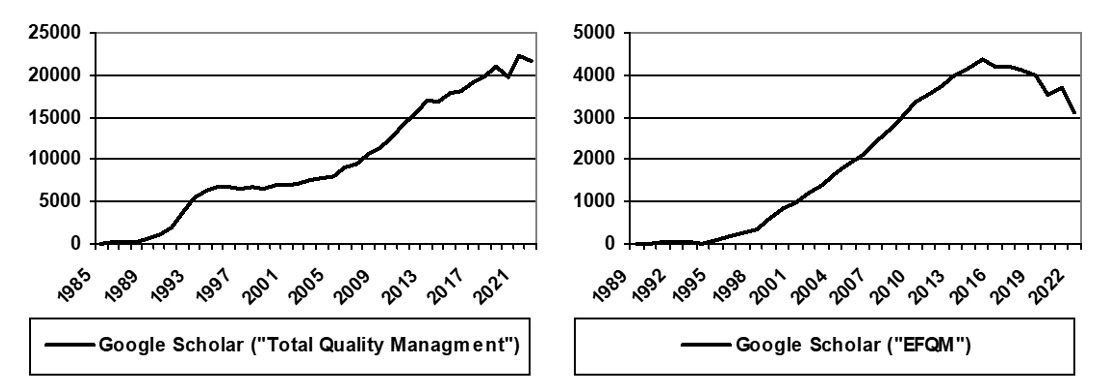
The diagram on the left side in Figure 5 shows the outcome of counting results delivered by Google Scholar by use of the search string “total quality management” for 1985, 1986, 1987 and so on. The year 1985 was used as the initial year because this was the year when the name Total Quality Management (TQM) is believed to have been coined (Martínez-Lorente et al., 1998). The diagram on the right side is created in a similar way, using the birth of the European Foundation for Quality Management (EFQM) in 1989 as the initial year.
.png)
The initial part of the curve for the TQM results follows the pattern described by management fashion scholars of the late 1990s (Abrahamson & Fairchild, 1999), showing the latency period, the rapid surge in popularity in the late 1980s and early 1990s, and then a plateau of popularity that lasts much longer than expected, somewhat surprisingly being followed by new growth rather than the expected period of decline. During the final few years, the curve contains some ups and downs, but the general impression is continued growth. A regression line based on the seven final years produces a growth rate of 611 papers per year.
As it has been mentioned how TQM continues to live through the national quality awards, it is interesting to observe the EFQM curve next to the TQM curve, as the European Quality Award (EQA) and several national quality awards make use of the EFQM assessment model. The EFQM graph is both similar and different from the TQM graph in important ways. The EFQM curve shows a latency period, a surprisingly long period of rapid growth until reaching a peak in 2017, and then goes into what looks like a short period of stable popularity before entering a stage of declining interest, despite the publication of the radically new EFQM 2020 model. The regression model based on the final seven observations indicates a decline in research at the rate of 171 publications per year.
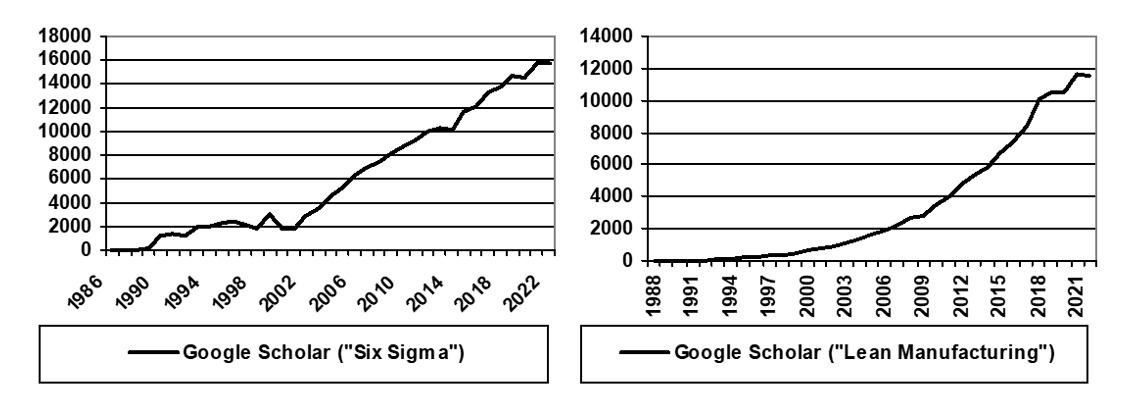
Because of growing interest in TQM in parallel with declining interest in EFQM, it is interesting to look at Six Sigma and Lean Manufacturing, as these frameworks are practical for implementing TQM through an operational process focus (ASQ, 2023a; Ogland, 2022a). The results of applying search strings “six sigma” and “lean manufacturing” on Google Scholar are shown in Figure 6.
.png)
The curves in Figure 6 are similar to those of TQM in the sense that there is no indication of having reached a period of decline. In the case of Six Sigma, which was introduced publicly in 1986, there is a period of latency and rapid surge before reaching a plateau of popularity between 1992 and 2002, but then, as was also the case with TQM, the expected period of decline is replaced by extreme growth that seems to continue even today. In the case of Lean Manufacturing, the curve looks like exponential growth from 1988 and onwards, although acceleration appears to have flattened out in the most recent years. Nevertheless, linear regression indicates a growth in research interest of 689 publications per year for Lean Manufacturing, which is slightly higher than the growth of 592 publications per year for Six Sigma.
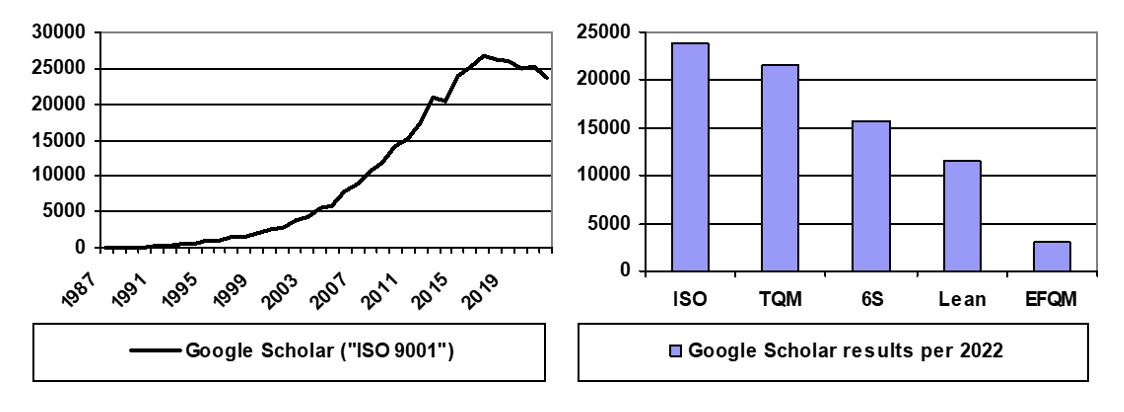
ISO 9001 is another way of implementing TQM, so the diagram on the left side of Figure 7 contains the results for using the search string “ISO 9001” on Google Scholar, while the diagram on the right side shows the number of results from the previous searches by narrowing down on the year 2022.
.png)
The diagram on the left shows a development for ISO 9001 that is similar to EFQM in the sense that it appears to have reached a peak of research interest and is now declining. By using a regression model over the final seven observations, the decline amounts to a reduction of 239 publications per year. On the other hand, as the diagram on the right shows, ISO 9001 is still the most popular of the frameworks, followed by TQM, Six Sigma, Lean Manufacturing and EFQM.
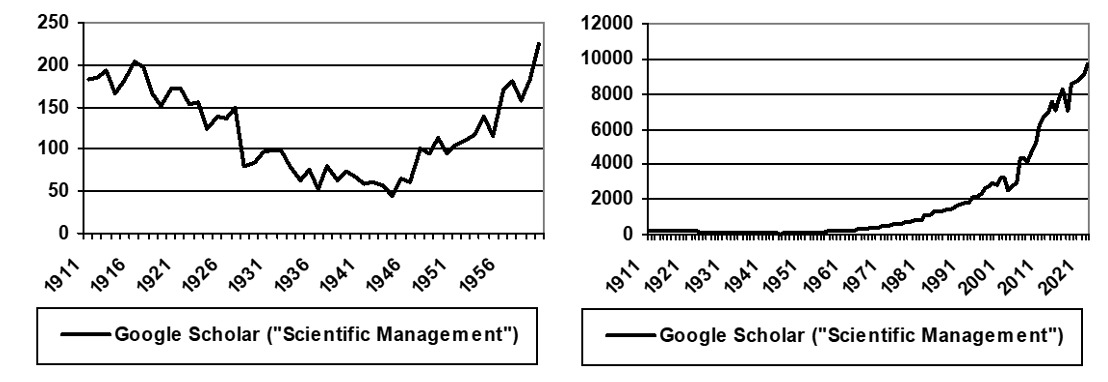
The relationship between TQM and Scientific Management was discussed in the theory section, with some people arguing that TQM represented a radical break with Scientific Management while others were suggesting that it was a re-branding of the same ideas or at least a continuation in the same way of thinking. Figure 8 presents the number of hits from applying the search string “scientific management” to Google Scholar for the years 1911, 1912, 1913 and so on. The diagram on the left shows the developments until 1960, while the diagram on the right shows the complete history.
.png)
The diagram on the left shows how Scientific Management was popular until the time of the First World War, then experienced a slow decline until the end of the Second World War, and then moved into a second period of increasing scholarly interest. The diagram on the right shows how the period of popular surge has continued until the present day. When using regression analysis based on the seven last observations, the current rate of growth is 303 publications per year.
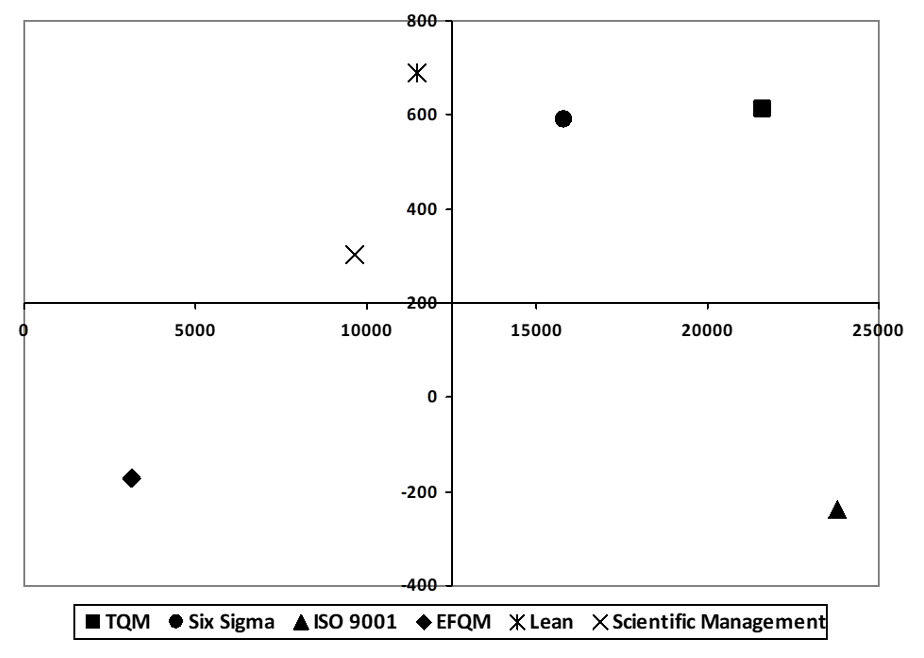
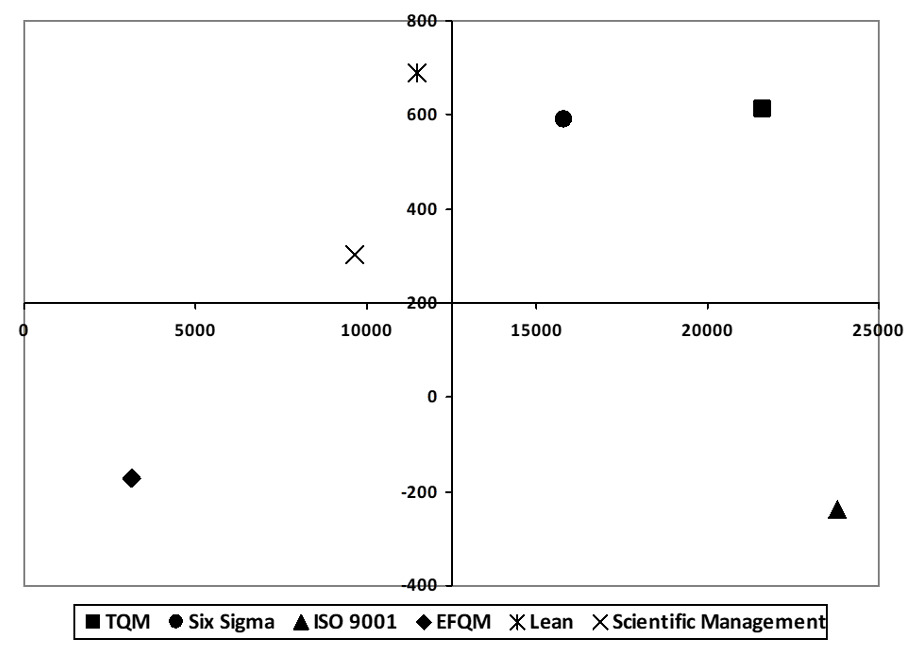
The diagram in Figure 9 is used for summarising information from the previous diagrams in a format that should be more useful for confirming or rejecting the hypothesis that TQM could be seen as a Cash Cow investment for CST-oriented researchers. The diagram is inspired by the BCG matrix in the sense that the horizontal axis represents market share in terms of publications per 2022 for each of the investigated frameworks while the vertical axis represents market growth in terms of average increase in publications over the final seven years 2016-22, thus making it possible to compare each of the quadrants with the quadrants in Figure 4.
The way TQM has a high market share and high growth makes it fit into the Star quadrant along with Six Sigma, rather than the Cash Cow quadrant where ISO 9001 is to be found. EFQM, with its low market share and declining interest among scholars, ends up in the Dog quadrant. Lean Manufacturing is close to Six Sigma both in terms of market share and growth, but since it ends up on the left side of the vertical axis, it is identified as a Question Mark, meaning that it may either evolve into a Star or a Dog. The same is seen for Scientific Management.
4.3. Case study results
Between 1999 and 2006, when one of the authors did action research on how to implement TQM in public administration, the client organisation explicitly referenced TQM in both the 1996 general strategy document and the 1998 IT strategy document (Ogland, 2013). When the researcher returned to the organisation in 2017, there were no longer any references to TQM.
From 2008 and onwards, the organisation had jumped on the Lean Manufacturing bandwagon, which incidentally had been included within the TQM framework between 1999 and 2006, but had then broken loose as a separate initiative. When a new head of the client organisation was appointed in 2013, he had been leading the organisation that promoted TQM for the national public sector through the EFQM-derived Common Assessment Framework (CAF), which was recommended and distributed in his name, but he did not make TQM/CAF part of his leadership strategy in the client organisation, unlike how his predecessor had made Lean Manufacturing into a central part of his strategy. When discussing TQM with him in the autumn of 2019, he mentioned his engagement with CAF but had no views on how CAF/TQM related to Lean Manufacturing (Ogland, 2020). The quality manager of the client organisation had no personal interest in pursuing TQM through EFQM assessments and terminated attempts at trying to implement TQM through action research (Ogland, 2023b, pp. 25–26).
Before the TQM action research was terminated, there was an attempt at trying to get in contact with the TQM network that was run through the public organisation that was responsible for the national CAF strategy, but it turned out that the person responsible for CAF had retired and the TQM network had dissolved.
The change in attitude towards TQM can also be noticed in other ways. When one of the authors submitted a paper on CST and TQM to Systemist in the spring of 2023, one of the reviewers commenced the feedback in the following manner:
The paper deals primarily with TQM and how to improve its success rate. Is TQM still a popular vehicle for change?
The quote is taken as an indication of how some scholars may identify TQM with the management fashion of previous decades, which makes it look somewhat dead, rather than TQM having become a part of today’s common practice, which would make it look highly alive, or what van der Wiele et al (2000) described as a development from “fad to fit”.
Despite these various indications of TQM not being as popular as it was in the late 1980s and early 1990s, the personal experience of the author of the case study was that TQM frameworks such as EFQM/CAF continue to have relevance when it comes to the strategic aspects of organisational improvement. Of course, it would make things easier if there was more overt support for TQM through such models, but many of the ideas that were introduced with TQM in previous decades, such as customer focus, employee empowerment, social responsibility and business success have become part of the mainstream rhetoric, so the importance of EFQM/CAF assessment models is not necessarily in spreading the gospel of TQM but the fact that they make it possible to measure progress and compare with others (Ogland, 2022a).
5. Discussion
5.1. Is TQM dead or alive?
Although one should be careful of drawing too wide conclusions from the student survey, at least when trying to use it as a sample from the wider population of people interested in topics like sport management, it gives the impression that TQM was a relatively well-known concept. It was not identified as particularly trendy, but the students did not believe it was dead, or at least it was assumed to be alive within the sport management community. The very fact that they were being lectured on TQM and the way the course material contained references to TQM indicated some kind of aliveness both in industry and academia (Hoye et al., 2018; Torkildsen, 2012). In other words, the hypothesis about TQM being a Cash Cow for CST scholars was not challenged by the student survey.
In the case of the bibliometric study, the results were even more optimistic. None of the graphs produced by Google Scholar reproduced the full cycle of a management fashion by having a period of latency, rapid surge, a period of popularity and a period of decline. Only in the case of EFQM and ISO 9001 were there indications of decline, while most of the others still seemed to be on a rapid surge or perhaps just having reached a period of maximum popularity. This even included Scientific Management, which has been dead among management consultants for a century but may still play an important role in how organisations are actually run or how academics interpret aspects of contemporary management methods and philosophies (Evans & Holmes, 2013).
Perhaps somewhat surprisingly, when comparing the market share and market growth of TQM against ISO 9001, Six Sigma, Lean Manufacturing, EFQM and Scientific Management, using the count of Google Scholar results as a numerical indicator, TQM ended up in the Star quadrant of the matrix rather than the one aimed at characterising the Cash Cows. ISO 9001 ended up as a Cash Cow, reflecting how it was even more popular than TQM in terms of stimulating scholarly interest, but the interest in ISO 9001 was in decline, which was not the case for TQM. In fact, TQM was the framework with the highest combination of share and growth, making it the leading Star among the frameworks being compared, although the most recent years indicated a reduction in growth that might indicate a near change from Star into Cash Cow, assuming the dynamics in Figure 10.
.png)
The fact that Six Sigma was also identified as a Star, and how Lean Manufacturing seemed like a Question Mark on the brink of becoming a Star, gave the impression that doing TQM research would indeed be a very good investment for CST scholars. The only negative warning sign was the way the EFQM assessment model for the European Quality Awards seemed to have reached the stage of a Dog, meaning that the Wikipedia statement about how TQM was kept alive through the national quality awards may no longer be as convincing as it once may have been.
On the other hand, this worry that TQM may suffer because of declining interest in associated frameworks like ISO 9001, Six Sigma, Lean Manufacturing and EFQM is to some extent challenged by the way Scientific Management is identified as a Question Mark. Not only does Scientific Management seem to be alive after more than 140 years, but academic interest continues to grow exponentially, meaning that it may be useful for CST scholars to emphasise how TQM could be seen as having evolved from Scientific Management, making the older approach both more scientific and more humane as it regained popularity under the name of TQM.
When it comes to the case study, where one of the authors gives a personal account of how he has been experiencing the interest of TQM in industry and academia, the message is that TQM is no longer a buzzword. Just as was mentioned in the Wikipedia article, TQM as a management fashion was supplanted by ISO 9001, Six Sigma, Lean Manufacturing and the EFQM-based national quality awards, but when organisations are working with these alternative frameworks, they are using the same tools, methods and philosophical ideas that were promoted as part of TQM. This does not mean that the new frameworks are necessarily better, as is also pointed out in the case study, but it may be easier to get acceptance for doing CST-driven TQM when opportunistically labelling it with whatever management fashion the organisation has latched onto, like the way Agility was mentioned by one of the respondents in the student survey.
5.2. Possible explanations for the TQM status
The triangulated data reject the nil hypothesis that TQM is dead (or a dying Dog). Indeed, not only does TQM seem to be alive both in industry and academia, at least when we focus on TQM practice as embodied in a wide range of TQM-related frameworks as opposed to the way it was treated as a management fad in the late 1980s and early 1990, but also was it identified as a potential Star investment for CST scholars wanting to use TQM for doing politically motivated action research.
There may be several reasons for these results. If one looks at the bibliometric study, one of the reasons for the rapid surge in publications with reference to TQM from around 2008 and onwards is likely to be a consequence of how academia has been influenced by the digital economy. In recent decades, there has been an international growth of research institutions, researchers and scientific publications, accelerated by the way New Public Management (NPM) in many traditional university environments has created “publish or perish” pressure, so the fact that there is a visible surge in papers mentioning TQM does not necessarily mean that there has been a substantially increased interest in TQM as a phenomenon. It could also be explained as a part of how academia and the research industry have changed and how they continue to change.
Nevertheless, from the perspective of whether TQM is alive or not, the reason why there has been an increase in TQM-related scholarly writing is not of fundamental importance. What is important for CST scholarship is that TQM can be used as a framework both for doing and publishing research. The fact that there is more written about TQM in the academic press than ever before is positive from this perspective, even if much of it should consist of showing how a new framework has evolved from TQM, how the new framework is better than TQM, how TQM is no longer relevant, or whatever the reference to TQM might imply. The fact that TQM is part of the academic discourse should in principle be sufficient for CST scholars to shoehorn their studies into contemporary debates.
When it comes to the practical aspects of TQM, the case study illustrates the point that it may be useful to distinguish between the TQM fashion some 30-40 years ago and the way TQM tools like statistical quality control, flowcharts, checklists, just-in-time management, “zero defects” and ISO-based auditing have become part of today’s organisational practice, or at least how the tools, methods and philosophical aspects of TQM are well-known for many organisations, regardless of whether it is referred to as TQM or not. The only worrisome aspect of practical TQM is that it is often run by people who have little or no competence (Ogland, 2022b, 2023c), meaning that it does not produce the kind of results that a properly run TQM programme promises. Most of the reasons for failure and how to fix it have been known for decades (Brown et al., 1994), meaning that any serious attempt to aim for something like the EFQM-based national quality award should be expected to result in success, but seriousness is hard to come by, which may be part of the reason why EFQM was characterised as a Dog in the bibliometric part of the study.
Paradoxically, the challenges with organisations wanting the results of TQM while not willing to take the philosophy seriously is one of the things that should make TQM attractive for CST scholars. Not only is incompetence a challenge in TQM implementation, but often is this only a surface problem in organisational cultures characterised by fear, oppression and violence, working directly against the advice of TQM gurus and the various TQM implementation frameworks. From a CST perspective, this only makes the organisation more interesting, so the question for the CST scholar should be how to become part of the organisation and part of the TQM implementation process.
Another interesting aspect of the results is the way Scientific Management is identified as a Question Mark. As with TQM, the reason for the rapid surge in scholarly literature has little to do with the way Scientific Management was a management fashion at the beginning of the twentieth century. Few management consultants today would include Scientific Management in their portfolio, at least consciously, so the reason why Scientific Management scores high in the Google Scholar statistics is more likely due to how it is used as a historical reference, sometimes objectively and sometimes judgementally as means for producing political accounts of how some current management fashion matched with negative aspects of how Scientific Management was often implemented (Evans & Holmes, 2013).
For the CST scholar wanting to do action research on how to implement TQM, the way Scientific Management is identified as a Question Mark could be used for linking TQM both with the future and the past. In the same way as ISO 9001, Six Sigma and Lean Manufacturing can be thought of as frameworks for implementing TQM, the current definition of TQM through the EFQM model could also be thought of as a framework for implementing Scientific Management. Scientific Management is often presented in a negative light (Braverman, 1974; Evans & Holmes, 2013), but it can also be thought of as a framework for improving quality, productivity and competitive position through the use of scientific experiments (Merkle, 1980), which aligns with Deming’s (1994) management philosophy (aka TQM).
Unlike management consultants who want to sell the latest management fashion by comparing it with “outdated fashions” like Scientific Management, or academics who want to critique some new management fashion by showing how it reproduces some of the worst aspects of the past, CST scholars can use Scientific Management in a positive manner. If TQM evolved out of Scientific Management, essentially by a change of name, not only could current but also future versions of TQM be thought of as Scientific Management, stressing the difference between theory and practice, and thus placing a role for CST in restoring the way Scientific Management should be implemented in a way that supports the oppressed, returning it to the progressive ideology that produced Scientific Management in the first place (Kelly, 2016; Nelson, 1979).
6. Conclusion
There is a fit between TQM philosophy and CST ideology. The study was motivated by how the decline of the TQM fashion in the late 1990s made leading CST scholars abandon it as a vehicle for action research and instead latch onto new fashions (Flood, 1993, 1999), indirectly promoting a difficult-to-sustain programme of leaping from fashion to fashion as a way of getting to do action research in various organisations. From an academic point of view, it would have been more useful to exploit how TQM became a part of common practice and use this for defining a research programme for Critical TQM (CTQM), as a blending of TQM with CST (Flood, 1993; Ogland, 2019), but the success of such a programme depends on whether TQM actually is alive in industry and academia.
Is TQM dead or alive? From the viewpoint of the management consultancy industry, TQM may be dead, but the literature review and empirical research indicate that it is alive among academics and practitioners. Indeed, when the literature review led to the hypothesis that TQM is a Cash Cow for CST scholars wanting to engage in academic debate and have their works cited, the bibliometric analysis suggested that it is even better than that. TQM was identified as a Star in the sense of dominating the relevant research market through the combined perspective of share and growth. The impression was further strengthened through the survey and the case study, although the challenges in how to implement TQM remain the same as before, having to do with power, politics and competence.
As CST is specifically developed for dealing with power, politics and competence, engaging with TQM through CST-based action research on TQM implementation could be a highly relevant approach for CST scholars wanting to make an impact in the world. The only warning sign discovered by the study is the way TQM is given an operational definition through the likes of the EFQM assessment model, while both scholarly and practical interest in such models seems to be in decline.
One way for CST scholars to deal with the threat of how the operational definition of TQM is under attack could be to focus on how TQM was born out of Scientific Management, emphasising ideological aspects of Scientific Management that fit with CST, perhaps referring to this as Scientific Self-Management (SCSM), thus seeing SCSM as an extension of CTQM.
Acknowledgements
We would like to thank Prof. Jens Kaasbøll for taking part in an early discussion of the paper. Our gratitude also goes to the students who took part in the survey and the related discussion, including Matthew Livingstone, Jon Davis and Lukas Janke. Additionally, we would like to thank the anonymous reviewer for feedback that not only helped us improve the paper but also gave us ideas for future research.
Shingo is probably thinking of Taylor’s Shop Management (1903) as the original version of The Principles of Scientific Management was not published until 1911.